01
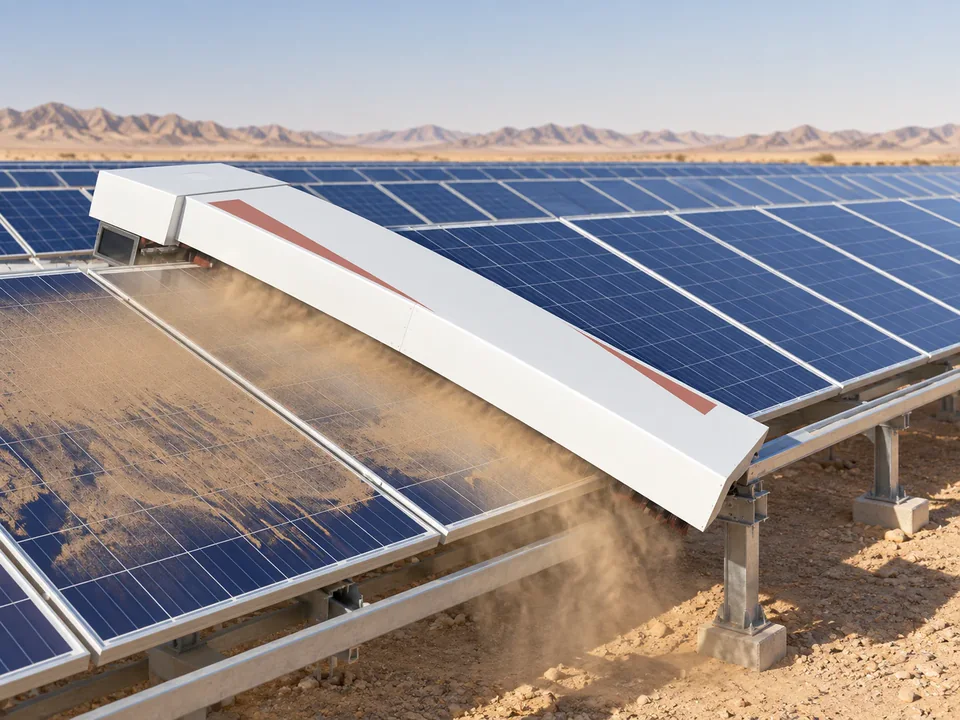
Fixed-tilt arrays
Check the module arrangement and structural interface of the proposed cleaning system.
Explore NOMADD Fixed-Tilt Solar Cleaning System
Solar-panel cleaning · Saudi Arabia & MENA
Match solar-panel cleaning equipment to the array layout, module requirements and cleaning routine. Dry and wet methods have different operating needs; neither is the default for every installation.
The application
Start with the workflow. These are different applications, not a ranking of interchangeable robots.
Check the module arrangement and structural interface of the proposed cleaning system.
Explore NOMADD Fixed-Tilt Solar Cleaning SystemPlan transitions, parking, charging and how the system reaches each row.
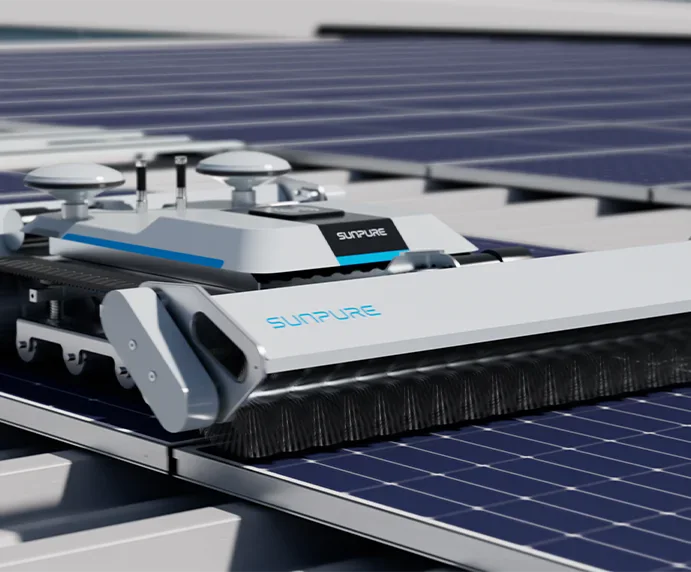
Explore Sunpure PT200 Trackless System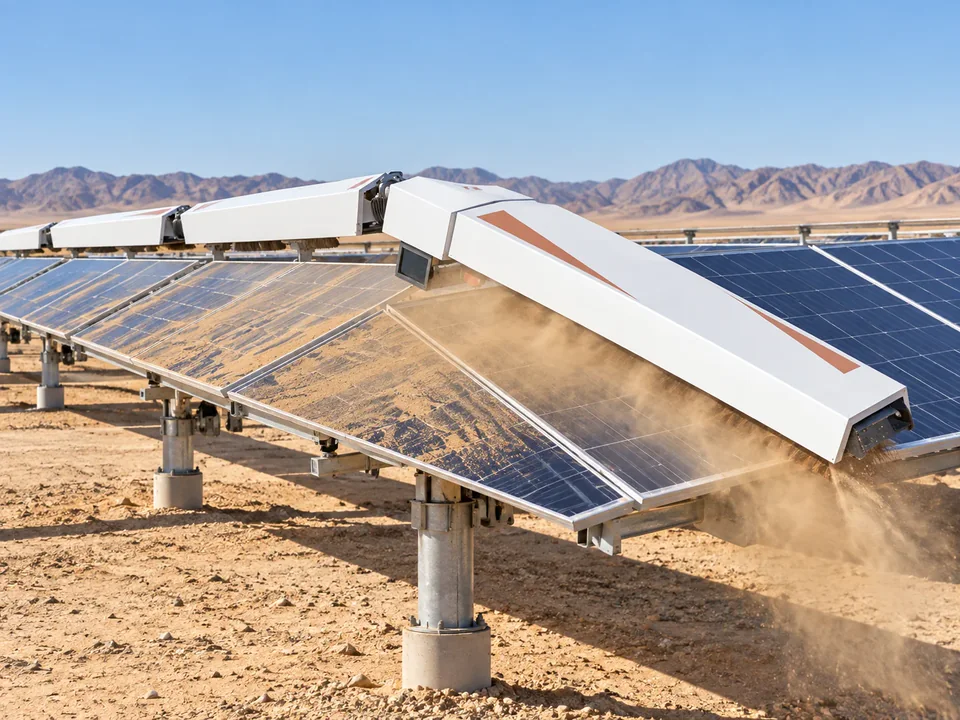
Compare deployment arrangements against your array geometry and maintenance access.
Explore NOMADD Edge Runner / Tracker SystemSelection logic
Share fixed or tracker structure, row lengths, gaps, inclines and edge details.
Check permissible contact, brush material, loads and warranty conditions.
Identify dust, adhered dirt and the cleaning method suitable for the modules.
Plan transfer between rows, charging, supervision and recovery across the site.
Your site. One project.
Send the array layout, module details, site conditions and current cleaning routine.
Product selection
4 models in this selection. Open a product for its exact specifications, configuration and commercial options.
Sunpure
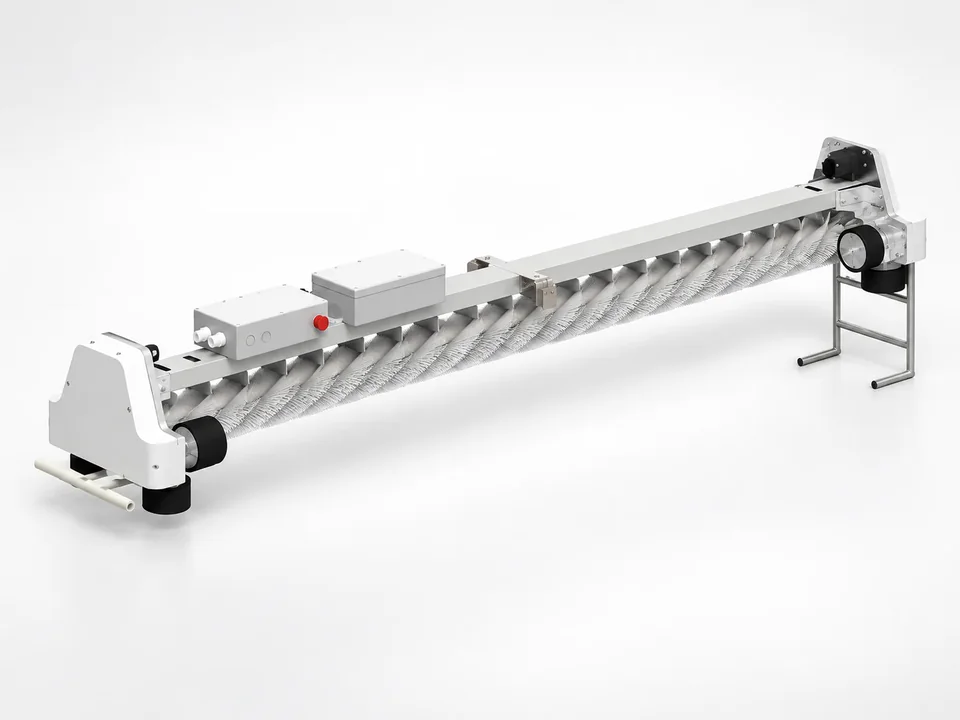
Sunpure
NOMADD
NOMADD
Four ways to deploy
All four options can be requested. Configuration, availability, minimum term and service scope are confirmed in your quote.
Own the equipment. The quote defines configuration, deployment and the service package.
Use a robot for an agreed period. Confirm dates, availability, minimum term and setup costs before booking.
Plan for ongoing operation. Equipment, contract term, maintenance and responsibilities belong in the proposal.
Combine the robot with deployment and an agreed operating and service scope. Define monitoring, maintenance and performance measures for your site.
Before you choose
No. Array structure, module dimensions, gaps and slopes affect suitability. Verify the exact model and mounting or movement method.
It depends on soiling and module requirements. Assess the result on representative panels and confirm the approved cleaning method.
Not from the robot alone. The result depends on soiling, weather, baseline cleaning and the PV system. Any performance target needs site measurements.
From selection to deployment