01
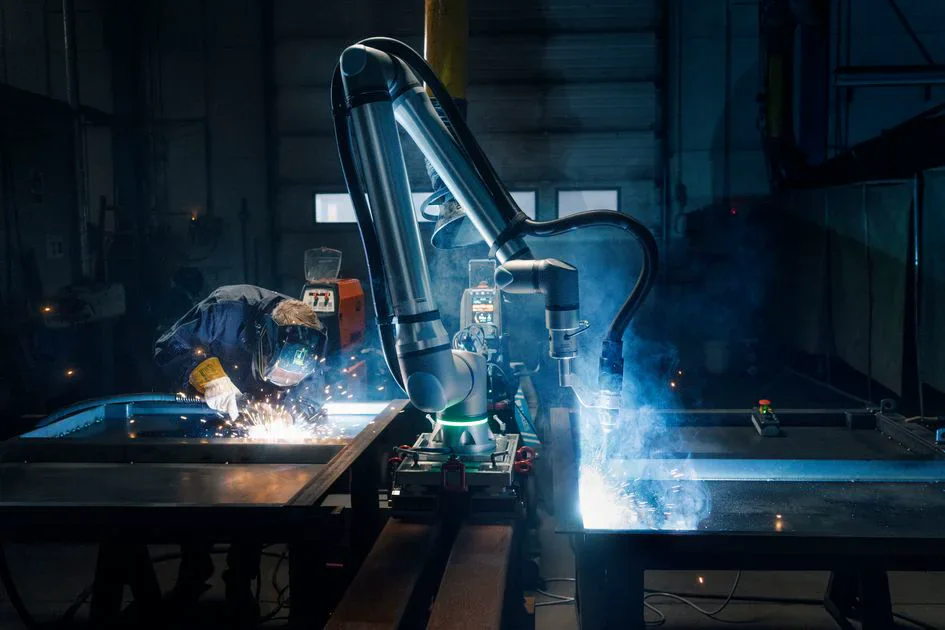
Welding
Start with the material, joint, fixture and required weld quality.
Explore W Cobot Welding Cell
Welding & palletizing · Saudi Arabia & MENA
A production cell combines the robot with a process. Welding, palletizing and machine tending need different input data, tooling and acceptance tests.
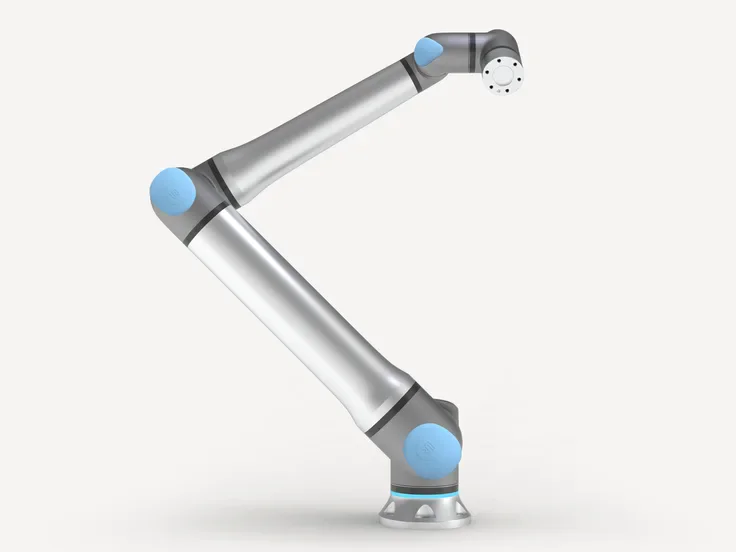
The application
Start with the workflow. These are different applications, not a ranking of interchangeable robots.
Start with the material, joint, fixture and required weld quality.
Explore W Cobot Welding Cell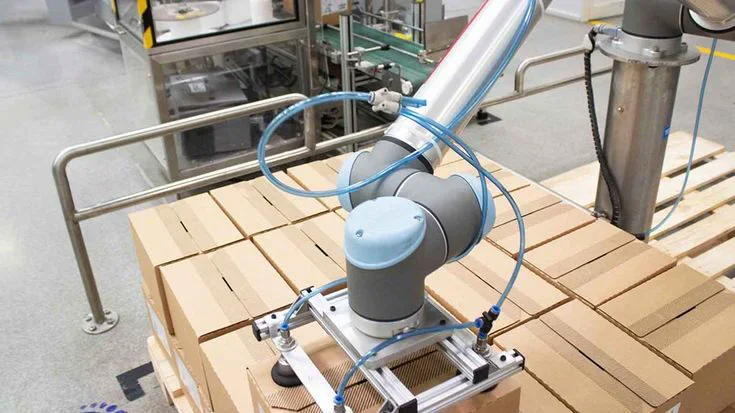
Validate cartons, gripper, pallet pattern and access to the final layer.
Explore W Cobot Palletizing Cell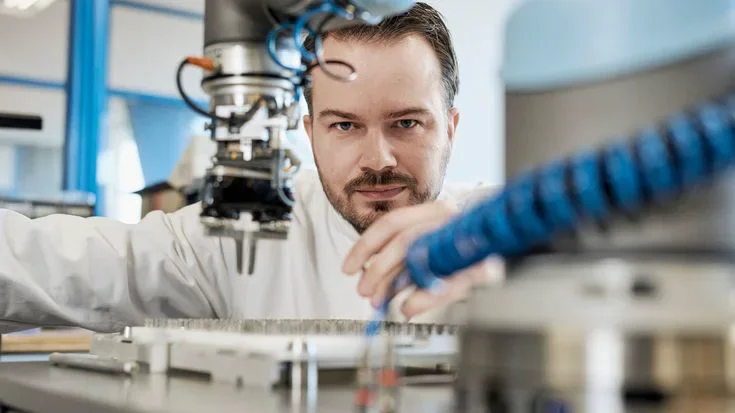
Coordinate part presentation, clamping, door access and machine signals.
Explore W Cobot Machine Tending CellSelection logic
Use real parts and variation, not an ideal sample alone.
Define gripping, clamping or torch access and required changeovers.
Include loading, robot motion, process time, inspection and unloading.
Agree quality, throughput, safeguards and fault recovery for the complete cell.
Your site. One project.
Send part drawings, the process, current cycle and quality requirements.
Product selection
3 models in this selection. Open a product for its exact specifications, configuration and commercial options.
Four ways to deploy
All four options can be requested. Configuration, availability, minimum term and service scope are confirmed in your quote.
Own the equipment. The quote defines configuration, deployment and the service package.
Use a robot for an agreed period. Confirm dates, availability, minimum term and setup costs before booking.
Plan for ongoing operation. Equipment, contract term, maintenance and responsibilities belong in the proposal.
Combine the robot with deployment and an agreed operating and service scope. Define monitoring, maintenance and performance measures for your site.
Before you choose
These are application packages scoped to the task. The final arm, tooling, fixtures, controls and safeguards are defined in the proposal.
No. Tooling and other loads must be included, and the operating poses matter. The whole application needs validation.
A video can illustrate an application, not establish your cycle time. Validate with representative parts, the intended layout and agreed acceptance conditions.
From selection to deployment